 Get PawLine
Kitten First Year
All guidesBefore the carrier comes through the door
PawLine editorial · Published October 20, 2026
Prepare resting, hiding, play and litter areas before bringing the kitten home. A familiar routine is easier to maintain than reconstruct.
What to know
RSPCA recommends cat-proofing and preparing toys, scratching opportunities, climbing places and a quiet accessible litter tray. Ask the previous caretaker about the kitten's food and routine, and bring a familiar blanket if available.
The Cat Group checklist encourages questions about health and behavior before choosing a kitten. Keep the answers and documents, and label what remains unknown. A checklist cannot guarantee future health. Arrange a veterinary contact early and ask about the individual kitten's first visit rather than relying on a generic timeline.
Keep this plan with your animal’s notes in PawLine. Get it for iOS · Get it for Android ·
Make the next step clear
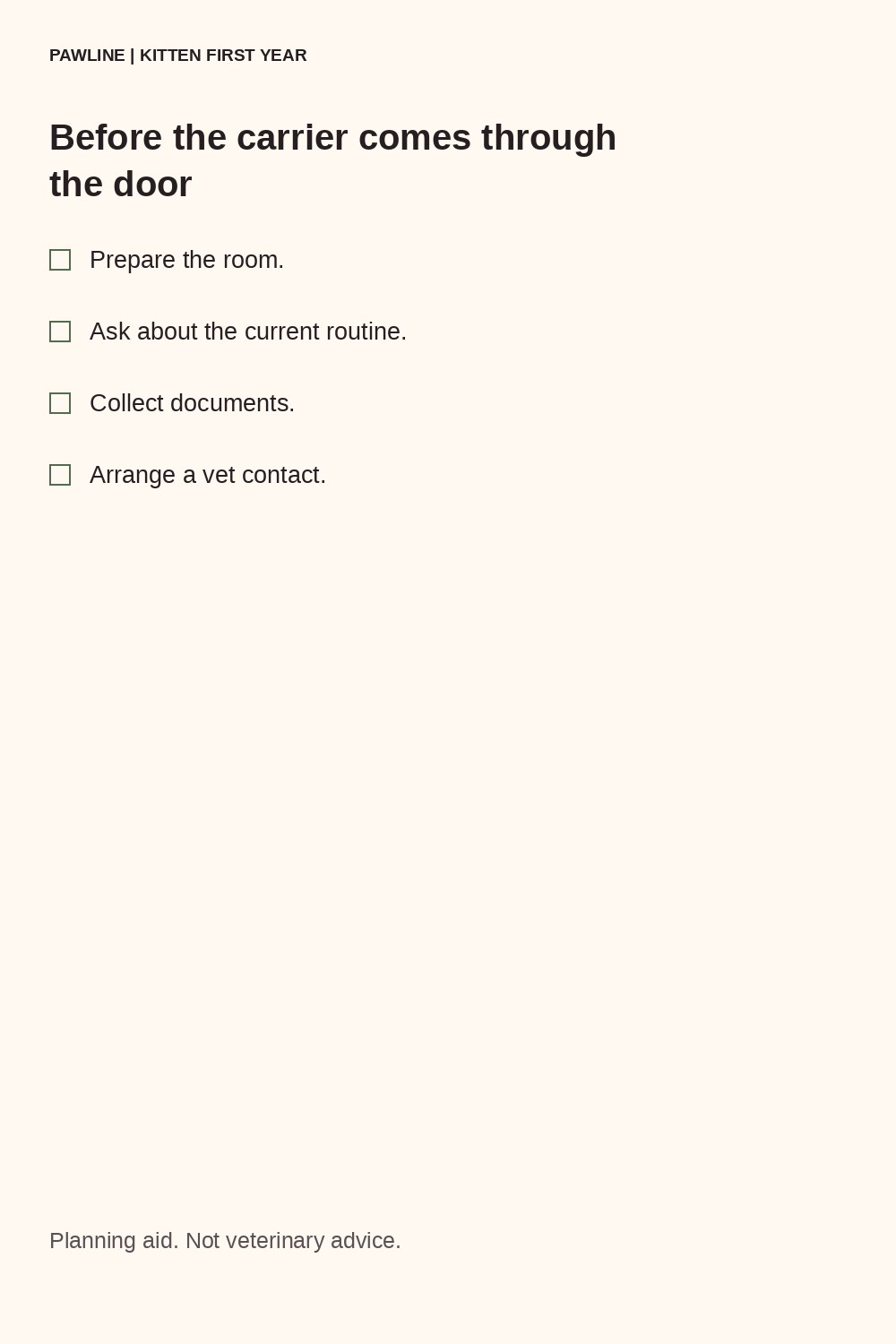
- 1Prepare the room.
- 2Ask about the current routine.
- 3Collect documents.
- 4Arrange a vet contact.
Printable planning sheet
Print this page or copy these labels into your own notebook. These are blank prompts, not data-entry fields. Nothing is saved or sent.
Related guides
Let settling in stay small and positive
Keep the first food log simple
A litter note without guesswork
Make room for play and for stopping
Make the carrier part of ordinary life
Sources and method
Original planning worksheets informed by the sources above. No clinical review has been completed. Sources checked October 19, 2026. General guidance may not fit your animal or local rules.
Get PawLineLeer esta guía en español (traducción sin revisión veterinaria)
Questions before you use this guide
What should I prepare first?
Prepare resting, hiding, play and litter areas before bringing the kitten home. A familiar routine is easier to maintain than reconstruct.
Does this guide replace veterinary advice?
No. It is an educational planning aid, not diagnosis, dosing or treatment. It has not yet been individually reviewed by a licensed veterinarian. Talk to your veterinarian about your animal and do not wait for an app response in an emergency.
Open the printable checklist card
Editorial team · Published October 20, 2026